
What if FODZYME isn't working?Updated 2 months ago
FODZYME works consistently on specific FODMAPs (fructans, GOS, lactose), but results can vary based on how it's used, what you're eating, and your individual digestion. Keep in mind that FODMAP-related symptoms typically appear 4-8 hours after a meal, not during or immediately after eating. If you're not seeing the results you want, read on to identify why that might be happening and what you can do.
If you're still figuring out what improvement should look like, review how soon you should expect to see effects.
Common mistakes to avoid
Certain factors can improve your body’s response to FODZYME. Here are a few to explore:
- Mix into your meal: FODZYME needs to be mixed in with your meal or taken with your first few bites of food. The enzymes must directly contact the food in order to work.
- Experiment with your dosage: A single dose may not be sufficient for large portions or meals with multiple FODMAPs. High-FODMAP meals require 1.5-2 doses.¹
- Know which foods FODZYME targets: FODZYME neutralizes fructans, GOS, and lactose. It doesn’t break down polyols or excess fructose. If your triggers fall outside FODZYME’s scope, symptoms may persist.
- Start with simple meals: Foods with many ingredients (like pizza, burritos, or restaurant dishes) contain multiple potential triggers, both FODMAP and non-FODMAP. If your first test is a complex meal, it's harder to assess whether FODZYME could help.
- Keep a food and symptom log: While you’re still determining your triggers, it’s a great idea to use FODZYME on all foods (even “safe” ones), and to track both what you eat and how you feel. For most people, FODMAP symptoms appear 4-8 hours after eating. Symptoms outside that window are likely something else, like gastrocolic reflex, stress, or a reaction to an earlier meal.² That said, every body is different! Tracking your meals and symptoms can help you identify how your body reacts and how to make FODZYME work for you.
Start simple, then build up
When evaluating FODZYME, start with a simple test rather than a complex meal. Try one trigger food in a controlled setting; for example, a handful of grilled onions added to plain rice, or a slice of bread with butter. This isolates the variable and helps you understand whether FODZYME is working on that specific FODMAP.
Once you're confident FODZYME is helping with simple meals, you can gradually introduce more complex dishes that stack multiple triggers. Increase your dose accordingly (1.5-2 doses for heavily stacked meals) and expect some experimentation.
Here’s a list of ingredients to help you get started:
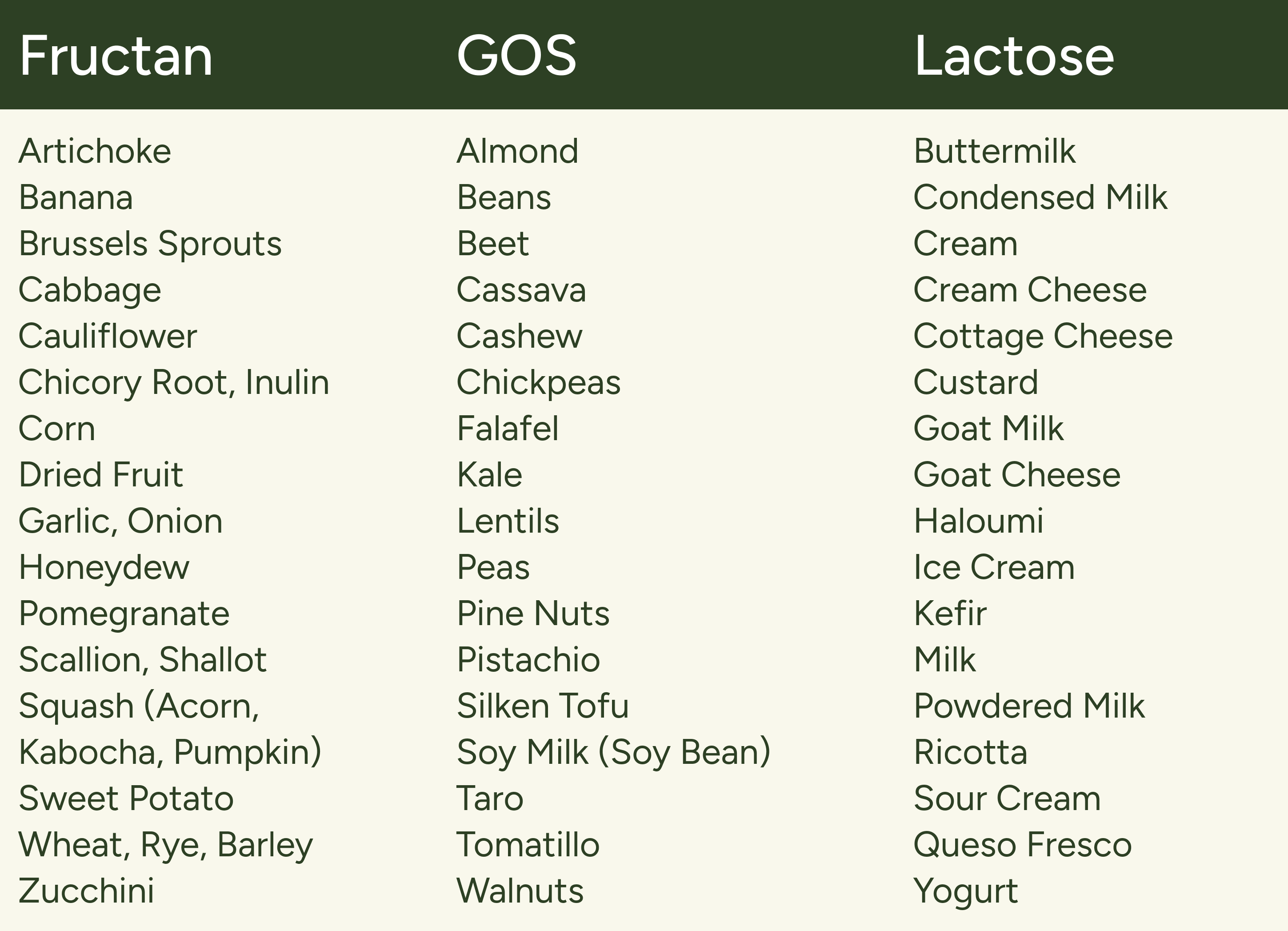
Adjust your dose or portion size
Dosing is highly individual and requires experimentation to figure out what works best for your body. The amount you need for half a banana versus three slices of pizza may be very different. If the standard dose isn't providing relief, try this:
- Increase your dose: Try 1.5-2 doses on high-FODMAP meals or foods you know are major triggers for you.
- Reduce your portion size: Instead of increasing FODZYME, try one dose on a smaller serving of the trigger food. This can help you find your personal threshold.
Checklist for proper use
If FODZYME doesn't seem effective, run through the following checklist. Small adjustments in any of these areas can make a noticeable difference.
- Timing: Are you taking it with your first few bites, not before or after eating?
- Dose: Does your dose match the portion size and FODMAP intensity of the meal?
- Consistency: Have you used it regularly for at least 5-7 days to assess results?
- Distribution: Is FODZYME making direct contact with your food? Have you mixed it in or applied it across the dish?
- Food type: Does the meal contain FODMAPs that FODZYME® actually targets (fructans, GOS, lactose)? Use the Monash University FODMAP Diet App or our free FODMAP Food Scanner as a resource.
- Storage: Has FODZYME been stored properly and is it within its best-by date?
- Authenticity: Has FODZYME been purchased directly from fodzyme.com or one of our authorized resellers?
Your environment & state of mind matter
Digestion is influenced by more than just food. How you feel physically and emotionally can affect your results. Consider this:
- Were you nervous, stressed, or excited when you ate?
- Were you already experiencing a flare or symptoms?
- Were you eating in a busy, unfamiliar, or uncomfortable setting?
Stress and anxiety can trigger or worsen digestive symptoms independent of FODMAPs. For the most accurate assessment of whether FODZYME is working, try testing it at home when you're relaxed. Once you feel confident in your results, you can use it more freely in other settings.
Foods FODZYME helps digest
FODZYME targets three FODMAP types:
- Fructans found in garlic, onions, wheat, chickpeas, and Brussels sprouts
- GOS (galacto-oligosaccharides) found in beans, lentils, cashews, and pistachios
- Lactose found in milk, yogurt, soft cheeses, and other dairy products
FODZYME does not help with:
- Polyols (sorbitol, mannitol) found in apples, cherries, mushrooms, cauliflower, and sugar-free gum
- Excess fructose or high-fructose corn syrup
- Symptoms triggered by fatty, spicy, or acidic foods
- Gluten-related conditions such as celiac disease or non-celiac gluten sensitivity
If your symptoms are driven by non-FODMAP factors, enzymes may not provide relief.
FODZYME and fructose
FODZYME does not break down fructose or high-fructose corn syrup. Fructose intolerance is different from other FODMAP sensitivities. Symptoms usually relate to a high fructose-to-glucose ratio, not fructose alone (except in rare conditions like hereditary fructose intolerance). Some important context:
- Fructans are chains of fructose that often end with a glucose unit.
- When FODZYME breaks down fructans, it releases small amounts of fructose and glucose.
- For most people, fructose tolerance is much higher than fructan tolerance.
Because many foods eaten with FODZYME also contain glucose or starches, this typically supports fructose absorption. However, FODZYME is not recommended for use on high-fructose foods or products sweetened with high-fructose corn syrup.
FODMAP stacking still matters
FODMAP stacking happens when multiple high-FODMAP foods are eaten in one meal or across the day, overwhelming your digestion. FODZYME can help reduce symptoms from FODMAP stacking, but it doesn’t eliminate your tolerance limit entirely. By breaking down fructans, GOS, and lactose at the time you eat, FODZYME helps lower the total FODMAP load. However, very large portions or multiple triggers may still cause symptoms. You may need a higher dose for stacked meals.
Individual response varies
It’s normal for people to respond differently to FODZYME. While the enzymes reliably break down fructans, GOS, and lactose, symptom relief can vary depending on your personal FODMAP tolerance, overall gut health, and meal size and composition. Most customers notice less bloating, gas, and discomfort when FODZYME is used correctly.*
Get personalized guidance
- Chat with Zymo, FODZYME's AI guide, for a walkthrough based on your triggers and favorite foods.
- Join a free 30-min group consultation with our Registered Dietitians for help with dosing, trigger foods, and results.
- Consult a healthcare provider if symptoms persist despite correct use, or if you're unsure what's causing them. A gastroenterologist or registered dietitian specializing in digestive health can help identify whether your symptoms are FODMAP-related or driven by other factors. Persistent or severe digestive symptoms always warrant professional evaluation.
¹For our purposes, "regular serving size" = what fits on a 9-inch dinner plate, per the USDA.
²In healthy individuals, food can take anywhere from 12 to 48 hours to make it through your digestive tract. We recommend keeping a food diary of all you eat over 48 hours and associated symptoms to determine what might be causing your discomfort. Source: Monash University.
*This statement has not been evaluated by the Food and Drug Administration. This product is not intended to diagnose, treat, cure, or prevent any disease.